Alla tradizionale processione del santo patrono di Isernia (Molise, Italy) per le vie simboliche della città, ho partecipato (finalmente) con un abito inaspettato.
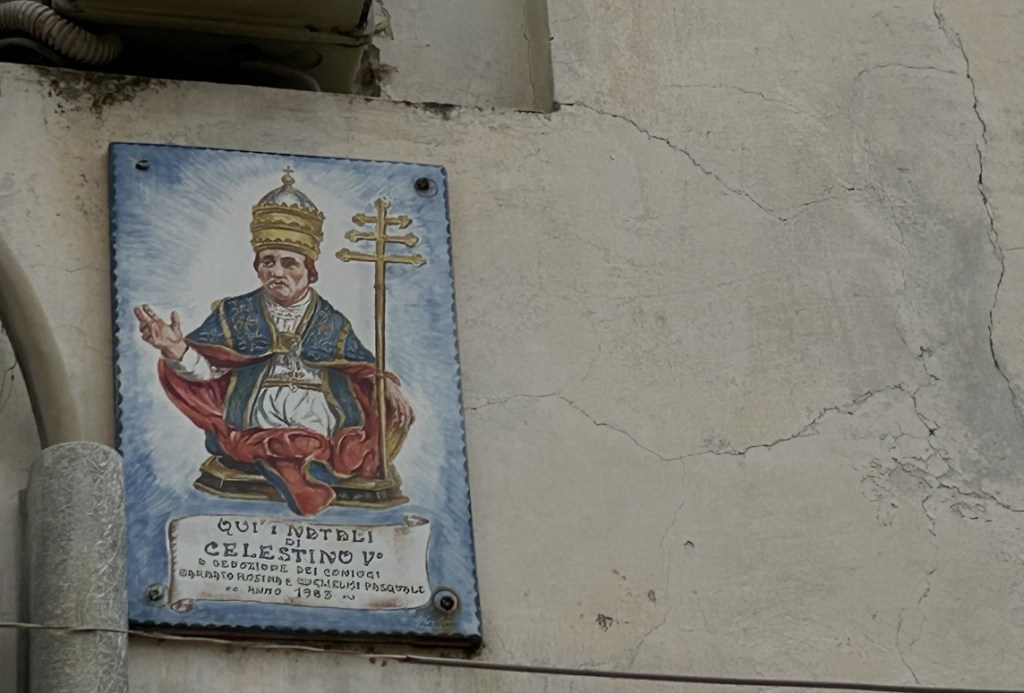
Nella terra natale del Papa Santo il 19 maggio di ogni anno si ricorda la sua morte.
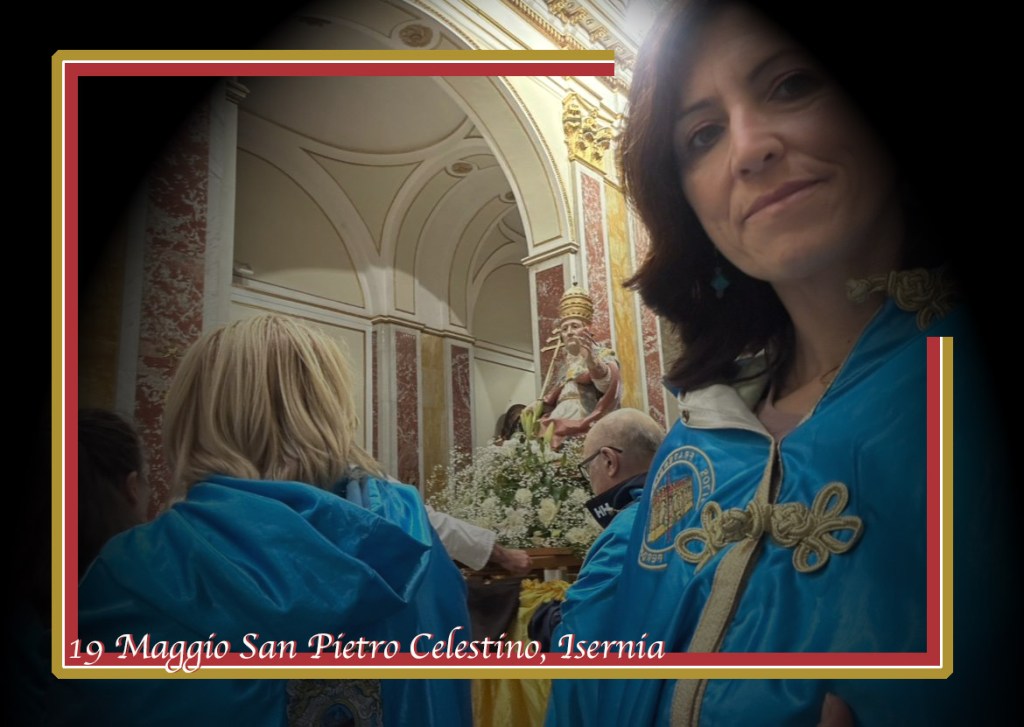
Pur essendo passato alla storia come San Pietro Celestino, per noi isernini nel parlare di lui rimane l’espressione tipica nel vernacolo locale ru Sandonə, con tono di affetto e devozionale.
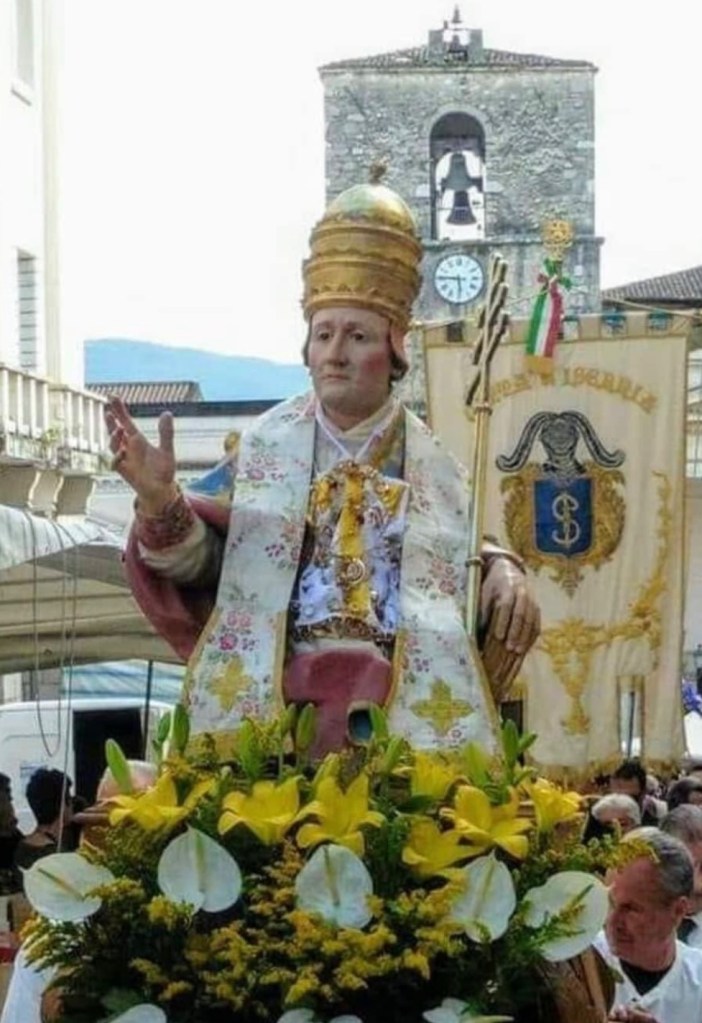
Prim’ancora di essere eletto Papa, Celestino V fondò una congregazione di monaci, poi detta dei Celestini, con regola benedettina e spirito eremitico, attorno al 1254 sull’Eremo di Santo Spirito a Majella autorizzato da Papa Urbano IV.
A Isernia, invece, nacque la Confraternita “La Fraterna”, rappresenta una delle istituzioni religiose e civili più antiche della città di Isernia.
Di seguito il percorso storico tracciato dal giornalista e conterraneo Mauro Gioielli: “…Con Bolla del 1° ottobre 1289, l’allora vescovo di Isernia, Roberto, approvò e confermò le regole della confraternita fondata da «Petri de Murone, huius civitatis Ysernie civis». L’originale di tale documento è andato perso, ma nell’archivio capitolare isernino [fondo pergamenaceo, fasc. V, n. 1] se ne conserva una copia cinquecentesca «la cui autenticità è stata messa a dura prova» [Viti 1972]. Per quanto concerne i contenuti, si tratta di «un regolamento incentrato in uno scambio di amore per appianare il bisogno, lenire il dolore e attutire i dislivelli sociali» [Mattei 1979]...
I CAPITULA
Riporto in italiano l’essenziale dei «capitula» della Frataria, sulla base di alcune traduzioni da me consultate (alcune edite e altre inedite), redatte in modo molto ‘libero’.
- Tra i confratelli ci siano rapporti di fedeltà e sincerità; nessuno di loro faccia o compia atti che possano portare disdoro a egli stesso o al gruppo e, se qualcuno viene a conoscenza di qualcosa che possa portare danno a un fratello o al gruppo nel suo insieme, agisca in modo da evitarlo o comunque lo comunichi all’interessato.
- Ogni confratello è tenuto a visitare il proprio fratello infermo, a venirgli incontro economicamente in caso di necessità, a essere presente insieme agli altri fratelli alle sue esequie nel caso muoia e a fargli cantare la messa, da un sacerdote della Frataria, nel trigesimo della sua morte.
- Ciascun confratello soccorra sempre un altro fratello ogni volta che costui sia in precarie condizioni economiche per sé e per i suoi familiari.
- I confratelli, per la remissione dei peccati, partecipino al raduno generale che si terrà ogni anno presso la sede della Frataria, unitamente al convivio con tutti i fratelli, nella domenica successiva alla festa del beato Francesco. In tale occasione, ogni confratello versi cinque grana d’oro occorrenti per formare un fondo cassa per gli scopi propri della confraternita.
- Morendo, ognuno dei confratelli, pro anima sua, lasci alla Frataria un tareno d’oro o anche di più.
- Nella notte successiva alla celebrazione del convivio, i confratelli si rechino nella ‘casa’ della Frataria per commemorare i fratelli morti e per celebrare la messa in suffragio dei defunti.
(TESTO ORIGINALE DELLA BOLLA) Nos Robertus, Dei gratia yserniensis episcopus, notum facimus universis Christi fidelibus, presentes licteras inspecturis quod pontificalem decet sollertiam sue dictioni positos viros ad misericordie opera invitare, invitatos volentes suscipere informare, et informatos in eisdem operibus confovere, ut Christi lex, que in ipsis instituta dignoscitur, dilatetur in subditos, et confoventes sui officii debitum exercendo, que in terra in benedictionibus seminant, de benedictionibus in celis metere valeant copiose...”
La sua storia, dunque, attraversa oltre sette secoli e si intreccia con la vita spirituale, sociale e urbana della città, fino a diventare parte integrante dell’identità storica isernina.
Oggi uomini e donne di buona volontà e fede si avvolgono nel mantello di colore celeste lucido con bordatura in oro e guidano, la processione per le vie della città.
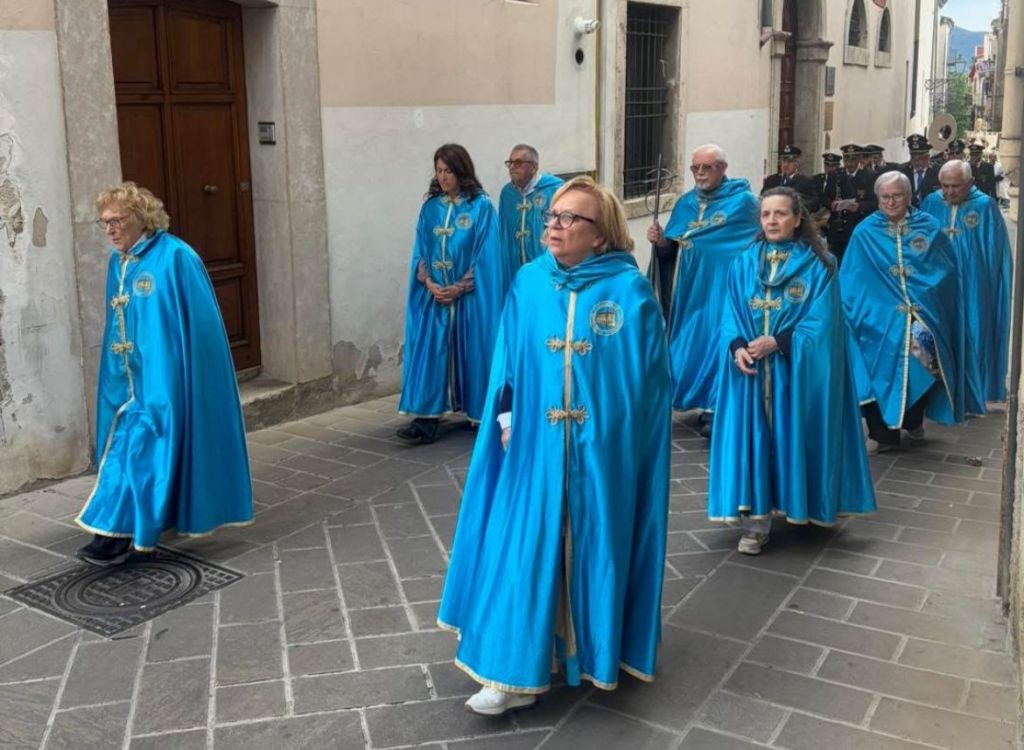
Da piccola, nel laboratorio sartoriale della mia cara zia Beatrice, ho assistito alla realizzazione di quei precisi indumenti e fantasticavo su chi dovesse indossarli. Mi dicevo in silenzio chissà a chi è destinato un mantello così ampio? Dovrà di certo rappresentare qualcuno di molto importante… Poi crescendo lo l’ho visto indossato e, indirettamente, ho continuato a intuirne l’importanza. Quest’anno, nel chiedere l’orario della messa, un caro amico conterraneo mi risponde con questa inaspettata domanda Perché non vieni ad indossare il simbolo della congrega di San Pietro Celestino?! Senza esitare risposto subito Quale invito migliore… ma certo che sì!
Dunque, una considerazione che sento di fare e di condividere con voi, posso dire di aver assistito a una evoluzione interiore senso positivo:
da bambina: ho visto e fantasticato sul valore di quell’abito, mentre la zia lo confezionava;
da mamma: racconto a mia figlia di quando, alla sua età, osservavo e immaginavo a riguardo, arricchendo l’argomento con il significato storico e la simbologia che l’abito racchiude in sé;
quest’oggi: avvolta in quell’ampio abito (per l’esattezza si tratta di un mantello a ruota con cappuccio) sento e vivo con emozione ancor più la mia Isernia!
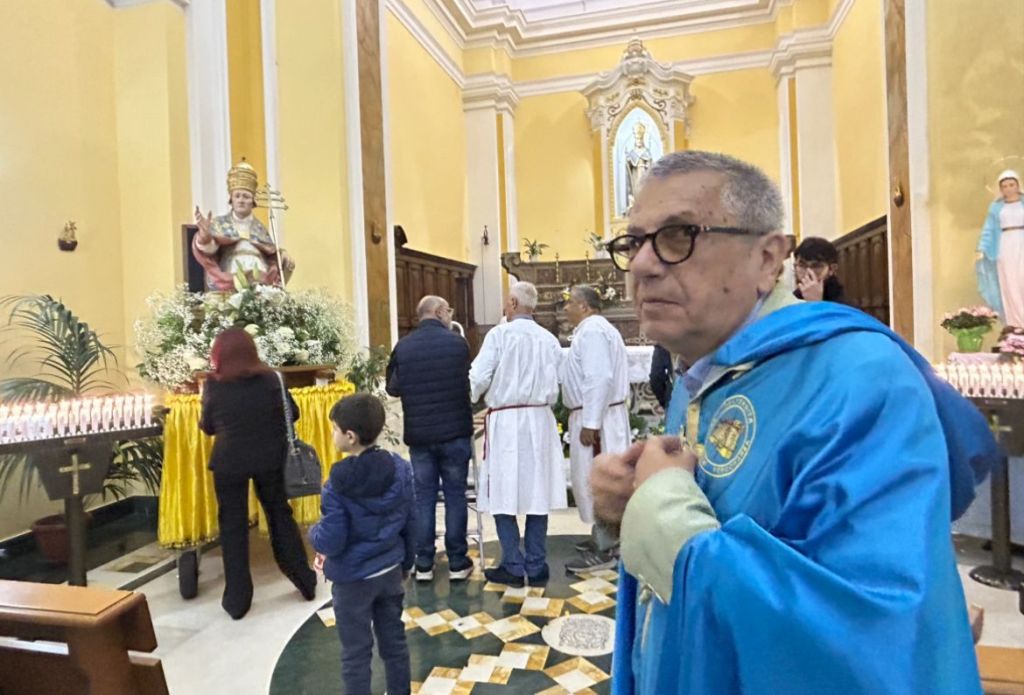
Il vivere qui e ora è stato accentuato con la preghiera e la devozione per quell’umile isernino che qui nacque (dove anche io sono nata e ho scelto di rimanere) e rifiutò fermamente ciò che l’uomo gli prospettava… per scegliere di accogliere Dio nel suo cuore: la vera grandezza che solleva cuore e anima dalla terra! 🙏🏼💗😇
Rassegna stampa
Reportage a Isernia del 19/05/2026 di Fabrizio Fusco – Amolivenews
Processione a Isernia del 19/05/2026 di Clara Castiello
Papa Celestino V per le vie della sua Isernia il 12 ottobre – Gomoda.me

——🇬🇧—— Postcard from Isernia 15 – Celestine V
I finally participated in the traditional procession of the patron saint of Isernia (Molise, Italy) through the city’s symbolic streets, wearing an unexpected outfit.
In the Holy Pope’s native land, May 19th of each year commemorates neither his death.
Although he has gone down in history as Saint Peter Celestine, for us Isernians, the typical expression in the local vernacular, ru Sandonə, remains when we speak of him, with a tone of affection and devotion.
Before being elected Pope, Celestine V founded a congregation of monks, later called the Celestines, following a Benedictine rule and a hermitic spirit, around 1254 at the Hermitage of Santo Spirito a Majella, authorized by Pope Urban IV.
In Isernia, however, the Confraternity “La Fraterna” was founded, representing one of the oldest religious and civil institutions in the city of Isernia.
The following is the historical overview traced by journalist and fellow citizen Mauro Gioielli: “…With a Papal Bull of October 1, 1289, the then bishop of Isernia, Roberto, approved and confirmed the rules of the confraternity founded by “Petri de Murone, huius civitatis Ysernie civis.” The original of this document has been lost, but a sixteenth-century copy “whose authenticity has been severely tested” [Viti 1972] is preserved in the Isernia chapter archives [parchment collection, folder V, no. 1]. As for its content, it is “a regulation centered on an exchange of love to alleviate need, soothe pain, and mitigate social disparities” [Mattei 1979]…
CAPITULA
I present in Italian the essence of the Frataria’s “capitula,” based on several translations I have consulted (some published and some unpublished), drafted in a very “free” manner.
1. Among the brothers, there should be relationships of fidelity and sincerity; none of them should do or commit acts that could bring disgrace upon himself or the group, and if anyone learns of anything that could harm a brother or the group as a whole, he should act to avoid it or at least communicate it to the person concerned.
2. Each brother is required to visit his sick brother, to provide financial assistance in case of need, to be present with the other brothers at his funeral if he dies, and to have Mass sung for him by a priest of the Frataria on the thirtieth day after his death.
3. Each brother should always assist another brother whenever that brother is in precarious financial circumstances for himself or his family.
4. For the remission of sins, the brothers should participate in the general gathering held annually at the Fratarium, along with a banquet with all the brothers, on the Sunday following the feast of Blessed Francis. On this occasion, each brother should contribute five gold grana to form a fund for the confraternity’s specific purposes.
5. Upon dying, each brother should leave a gold tareno or more to the Fratarium, pro anima sua.
6. On the night following the celebration of the banquet, the brothers should go to the Fratarium’s “house” to commemorate the deceased brothers and to celebrate Mass for the deceased.
(THE ORIGINAL TEXT OF THE BULL) Nos Robertus, Dei gratia yserniensis episcopus, notum facimus universis Christi fidelibus, presentes licteras inspecturis quod pontificalem decet sollertiam sue dictioni positos viros ad misericordie opera invitare, invitatos volentes suscipere informare, et informatos in eisdem operibus confovere, ut Christi lex, que in ipsis instituta dignoscitur, dilatetur in subditos, et confoventes sui officii debitum exercendo, que in terra in benedictionibus seminant, de benedictionibus in celis metere valeant copiose...”
“Its history, therefore, spans over seven centuries and is intertwined with the spiritual, social, and urban life of the city, becoming an integral part of Isernia’s historical identity.
Today, men and women of good will and faith wrap themselves in the shiny blue cloak with gold trim and lead the procession through the city streets.
As a child, in my dear aunt Beatrice’s tailoring workshop, I watched those very garments being made and fantasized about who would wear them. I silently wondered for whom such a large cloak was intended? It must surely represent someone very important… Then, as I grew older, I saw it being worn and, indirectly, I continued to sense its importance. This year, when I asked for the time of Mass, a dear friend from Isernia responded with this unexpected question: “Why don’t you come and wear the symbol of the Congregation of Saint Peter Celestine?” Without hesitation, I immediately replied: “What better invitation… of course!”
So, a thought I feel compelled to share with you:
I can say I’ve witnessed a positive inner evolution:
As a child: I saw and fantasized about the value of that dress while my aunt was making it;
As a mother: I tell my daughter about when, at her age, I observed and imagined it, enriching the topic with the historical significance and symbolism that the dress holds within itself;
Today: wrapped in that flowing dress (a hooded cloak, to be precise), I feel and experience my Isernia even more deeply!
Living in the here and now has been accentuated by prayer and devotion to that humble man from Isernia who was born here (where I was also born and have chosen to remain) and firmly rejected what man offered him… to choose to welcome God into his heart: the true greatness that lifts heart and soul from the earth! 🙏🏼💗😇

