The plant of the prickly pear is native of central Mexico, Christopher Columbus expedition’s explorers introduced it into Europe. Actually it has become a distinguishing feature of southern Italian territories, as well as into Mediterranean area.

Its funny little structure looks beautiful and interesting for its fruit (just as prickly, but they give a touch of color), but it has a great resistance to drought and high productivity of biomass. The qualities of this plant are interesting and hidden: from it is possible to obtain a special fiber which, when applied as a coating on the furniture, gives it a very special appearance; it’s the reason to get an Oscar.

A farmer of Galatina, in the deep south of Puglia, is the winner of the “Green Oscar Coldiretti 2013,” the national award for innovation in the category “Style and corporate culture.” The procedure to obtain the fiber is articulated but the natural result and unchanged over time. It’s called “Sikalindi” the material that comes out that is patented. The production process takes place entirely in Italy (Lecce), and the final look is very curious. At the moment it is applied on the furniture, but it could find an eco-fashion not use thanks to its origin 100% nature.
In the Puglia region, a family from the village of Galatina had a great idea, which is now a company called Sikalindi (https://www.sikalindi.it/it/): recycling prickly pear leaves.
Their fibers become the structure for furniture and decorative objects: isn’t it a brilliant idea? Kudos to all-Italian creativity and respect for nature!
—-italian Version—-
Originaria del Messico centrale, la pianta del fico d’India fu introdotta in Europa dagli esploratori della spedizione di Cristoforo Colombo. In Italia, oggi è divenuta ormai elemento caratterizzante dei territori del sud, così come dell’area mediterranea tanto da passare quasi inosservato.
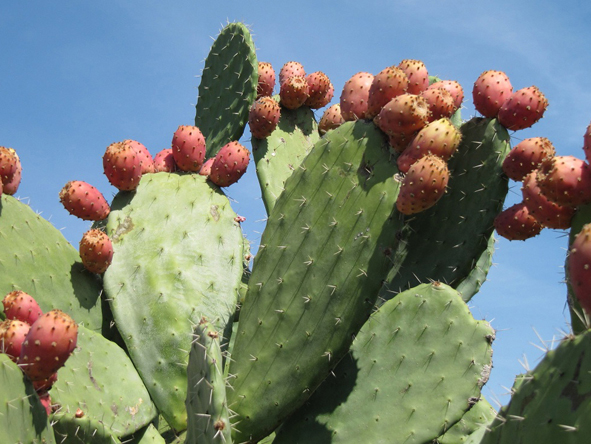
A guardare la sua buffa struttura appare poco bella ed interessante se non per i suoi frutti (altrettanto spinosi, ma che ne danno un tocco di colore), ma possiede una grande resistenza alla siccità e, al tempo stesso, una grande produttività in termini di biomassa.
Nella regione Puglia, una famiglia del borgo di Galatina ha avuto una grande idea, che oggi è una realtà aziendale di nome Sikalindi: reciclare le foglie del fico d’india.
le sue fibre divengono struttura per costruire mobili e oggetti di arredo: non è un’idea geniale! Complimenti alla creatività tutta italiane ed al rispetto della Natura!

 GoModa.me