“In loro c’era il germe che li vedeva quasi attori” sono stati definiti così il gruppo di giovani di Roccamandolfi (Molise, Italy). Il borgo molisano si sviluppa sulla catena montuosa del Matese, in cui la storia del brigantaggio è ancora viva nei racconti dei nonni.
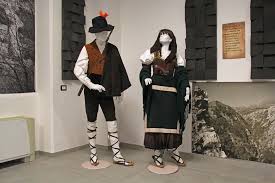
La statua de Il Brigante, realizzata da Fernando Izzi nel 2012, è un altro esempio: nell’immaginario comune il roccolano, infatti, è spesso associato alla figura del brigante. C’è poi il Museo Multimediale del Brigantaggio nel quale si possono anche ammirare i costumi della Brigantessa e del Brigante, oltrchè documenti ed aneddoti dell’epoca.
Tra le tante storie a tema briganti si è ben pensato di farne turismo scegliendone una in particolare e dando vita ad una rappresentazione teatrale.
La storia di Sabatino Lombardi che morì per vendetta d’amore: nella vicenda dunque il risvolto romantico con finale appropriato!
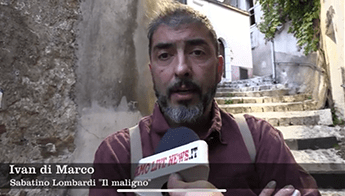
Qui il video-servizio di Fabrizio Fusco. Eccellente per completezza di immagini e contenuti!
La storica etnoband Il Tratturo di Isernia, però, ne aveva composto già il brano musicale che racconta in modo semplice ed immediato da cantastorie: l’energia musicale che viene fuori dall’assolo della zampogna, strumento antico di duemila anni, riesce a spiegare perfettamente i fatti accaduti. La vicenda del brigante Sabatino detto “il Maligno” che, secondo la cui leggenda, scende a patti con diavolo e diventa invincibile per poi vendicarsi per amore.
Lo spiega qui la voce de Il Tratturo, Mauro Gioielli.
Il titolo del brano è «BRIGANTE MALIGNO” dal Cd a titolo “Contado”.
Gli interpreti ed esecutori sono:
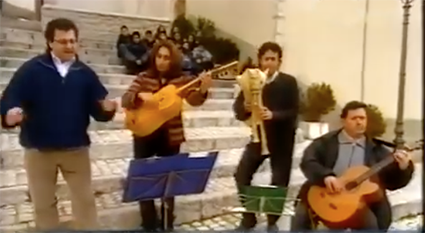
- Mauro Gioielli, voce
- Lino Miniscalco, zampogna e
ciaramella - Ivana Rufo, chitarra e voce
- Walter Santoro, tamburello
- Enzo Miniscalco, basso acustico
Benvengano, dunque, creative interpretazioni di varia natura del passato del nostro territorio, affinchè si creino legami saldi col presente e .. se ne intenda il futuro prossimo!
(foto da web)
Mariateresa Altieri
_________English version_________
Sabatino, Known as “The Malignant,” on Stage in Roccamandolfi
“They had the seed that made them almost actors”—this is how the group of young people from Roccamandolfi (Molise, Italy) has been described. The small Molise village is nestled in the Matese mountain range, where the history of brigandage is still alive in the stories told by grandparents.
The statue of “The Brigand,” created by Fernando Izzi in 2012, is another example of this: in common imagination, the people of Roccamandolfi are often associated with the figure of the brigand. There is also the Multimedia Museum of Brigandage, where visitors can admire the costumes of the Brigandess and the Brigand, as well as documents and anecdotes from the era.
Among the many stories of brigands, the decision was made to transform one particular tale into a tourism experience by bringing it to life through a theatrical performance.
The story of Sabatino Lombardi, who died out of revenge for love, brings a romantic twist with a fitting conclusion!
Here is the video report by Fabrizio Fusco, excellent for its completeness in images and content!
However, the ethno-band Il Tratturo from Isernia had already composed a musical piece that simply and directly tells the story like a traditional storyteller. The musical energy that emerges from the zampogna solo, a two-thousand-year-old instrument, perfectly explains the events. The tale is of the brigand Sabatino, known as “the Malignant,” who, according to legend, makes a pact with the devil, becomes invincible, and then takes revenge for love.
This is explained here by Il Tratturo’s lead vocalist, Mauro Gioielli.
The title of the song is “BRIGANTE MALIGNO” from the album Contado.
The performers and musicians are:
• Mauro Gioielli, vocals
• Lino Miniscalco, zampogna and ciaramella
• Ivana Rufo, guitar and vocals
• Walter Santoro, tambourine
• Enzo Miniscalco, acoustic bass
Welcome, then, to creative interpretations of our territory’s past in various forms, as they forge strong connections with the present and help us understand the near future!
( photo from web)
Mariateresa Altieri
 GoModa.me